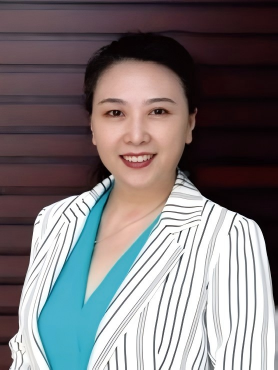
崔东红,医学博士,哲学学士,上海交通大学医学院附属精神卫生中心研究员,博士生导师。上海市重性精神病重点实验室执行主任,样本库主任。上海交通大学转化医学研究院(国家转化医学重大科技基础设施)兼职教授。2002年博士毕业于复旦大学精神卫生系,2007-2009年美国耶鲁大学精神疾病分子遗传学方向博士后。任中国神经科学学会精神病基础与临床分会(CSNP)常委、CSNP神经调控联盟主席、中国抗衰老促进会自然抗衰专业委员会副主任、上海医师协会整合医学学分会副会长,世界冥想日专家委员会专家。
长期从事精神疾病临床基础科研及心理咨询与治疗,主要研究方向为精神疾病精准医学和生物标记物研究、冥想作用的脑体机制研究,近年来开创了非药物精准整合干预精神疾病的方法,成功使近百名重性精神疾病患者停用抗精神病药物康复。开发了国际首个精神分裂症(SZ)与多病种鉴别诊断及疗效预测的蛋白标记物体系。揭示了巨噬细胞迁移抑制因子介导抗精神病药物代谢副作用的机制,并开发了预测代谢不良反应生物标记物,降低临床试错风险。国际上首个通过真实世界研究及随机对照临床实验证实了冥想训练可改善SZ顽固性幻觉、妄想及残留的阴性症状和认知功能障碍,提升了SZ的治疗效果,弥补了药物治疗的不足。国际上首个运用多模态系统揭示了不同冥想状态的生物标记物。揭示了冥想对代谢、免疫及心脑血管功能的调控作用,以及冥想对大脑-心脏的联合调控效应。在上海交大创建冥想高阶指导师培训课程,三年共培养冥想高阶指导师400余人,冥想讲师22人。辐射5个国家,20多个地区。应邀在联合国教科文组织“世界和平大会”做关于冥想及非药物精准整合促进方法青少年精神健康的大会报告。联合国世界冥想日(12月21日)申请成功的推动者之一。
荣获上海市浦江人才,上海市三八红旗手,国家重点研发精准医学项目首席科学家。主持国家自然科学基金、国家重点研发精准医学项目等多项科研项目。在国际上首次发现数个新的精神疾病风险基因及生物标记物,在《Journal of Clinical Investigation》、《Brain》、《Molecular Psychiatry》、《eBiomedicine》等高影响力刊物上发表论文100余篇。授权发明专利多项,主编、参编多部学术专著,主编我国首部从科学角度系统介绍冥想的《冥想科学基础与应用》及国内首部《精神分裂症精准医学临床诊疗指南》《双相障碍精准医学临床诊疗指南》《精神疾病啮齿类动物模型及行为学实验》等专著。2025年崔教授的“精神分裂症精准诊疗生物标记物发现及冥想辅助治疗应用”研究成果荣获荣获华夏医学科技奖三等奖
Donghong Cui, MD and BA in Philosophy, is a Principal Investigator and Doctoral Supervisor at the Shanghai Mental Health Center affiliated with Shanghai Jiao Tong University School of Medicine. She concurrently serves as the Executive Director of the Shanghai Key Laboratory of Psychotic Disorders, Director of the Biobank, and an Adjunct Professor at the Institute of Translational Medicine (National Major Science and Technology Infrastructure for Translational Medicine) at Shanghai Jiao Tong University. Professor Cui obtained her MD from the Department of Mental Health at Fudan University in 2002 and later completed her postdoctoral fellowship focusing on the molecular genetics of psychiatric disorders at Yale University in the United States from 2007 to 2009. Her prominent professional appointments include serving as a Standing Committee Member of the Chinese Society for Neuroscience Psychiatric Basic and Clinical Branch (CSNP), Chair of the CSNP Neuromodulation Alliance, Vice Chair of the Natural Anti-Aging Professional Committee of the China Anti-Aging Promoting Association, Vice President of the Integrative Medicine Branch of the Shanghai Medical Doctor Association, and an expert panelist for the World Meditation Day Expert Committee.
Professor Cui has long been dedicated to clinical and basic research in psychiatric disorders, alongside psychological counseling and psychotherapy. Her primary research interests lie in precision medicine and biomarker identification for psychiatric disorders, as well as the brain-body mechanisms underlying meditation. In recent years, she pioneered non-pharmacological, precision integrative interventions for psychiatric disorders, successfully enabling nearly a hundred patients with severe mental illness to achieve full rehabilitation and discontinue antipsychotic medications. She developed the world’s first protein biomarker system for the differential diagnosis of schizophrenia against other easily confused disorders and for the prediction of therapeutic efficacy. Furthermore, she elucidated the mechanism by which macrophage migration inhibitory factor mediates the metabolic side effects of antipsychotic drugs and developed a predictive biomarker for metabolic adverse reactions, effectively reducing clinical trial-and-error risks.
Through real-world studies and randomized controlled clinical trials, Professor Cui's team was the first globally to confirm that meditation training can significantly improve refractory hallucinations, delusions, residual negative symptoms, and cognitive dysfunction in patients with schizophrenia, thereby enhancing therapeutic outcomes and addressing the limitations of traditional pharmacotherapy. Her work also represents the world's first utilization of multimodal systems to uncover biomarkers corresponding to different meditative states, revealing the regulatory effects of meditation on metabolic, immune, and cardiovascular functions, as well as the brain-heart axis effect. To extend these findings, she established an advanced meditation instructor training program at Shanghai Jiao Tong University, training over 400 advanced meditation instructors and 22 meditation lecturers over a three-year period, with an international impact spanning 5 countries and more than 20 regions. She was invited to deliver a plenary lecture at the UNESCO World Peace Conference on utilizing meditation and precision non-pharmacological integrative methods to promote adolescent mental health, and she was one of the key driving forces behind the successful application establishing the United Nations' World Meditation Day on December 21.
In recognition of her academic contributions, Professor Cui has been honored as a Shanghai Pujiang Talent, a Shanghai March 8th Red Banner Pacesetter, and the Chief Scientist for the National Key R&D Program on Precision Medicine. She has principal-investigated numerous high-level research grants, including the National Natural Science Foundation of China and the National Key R&D Program on Precision Medicine. Her research has led to the global discovery of several novel risk genes and biomarkers for psychiatric disorders, culminating in the publication of over 100 papers in high-impact journals such as The Journal of Clinical Investigation, Brain, Molecular Psychiatry, and eBiomedicine. Additionally, she holds multiple authorized invention patents and has edited or co-authored several academic monographs. Notably, she served as the Editor-in-Chief for China's first scientific textbook on meditation, Scientific Foundations and Applications of Meditation, as well as pioneering domestic monographs including Clinical Guidelines for Precision Medicine in Schizophrenia, Clinical Guidelines for Precision Medicine in Bipolar Disorder, and Rodent Models of Psychiatric Disorders and Behavioral Experiments. In 2025, Professor Cui's research output, titled "Discovery of Biomarkers for Precision Diagnosis and Treatment of Schizophrenia and the Application of Meditation-Assisted Therapy," was awarded the Third Prize of the Huaxia Medical Science and Technology Award