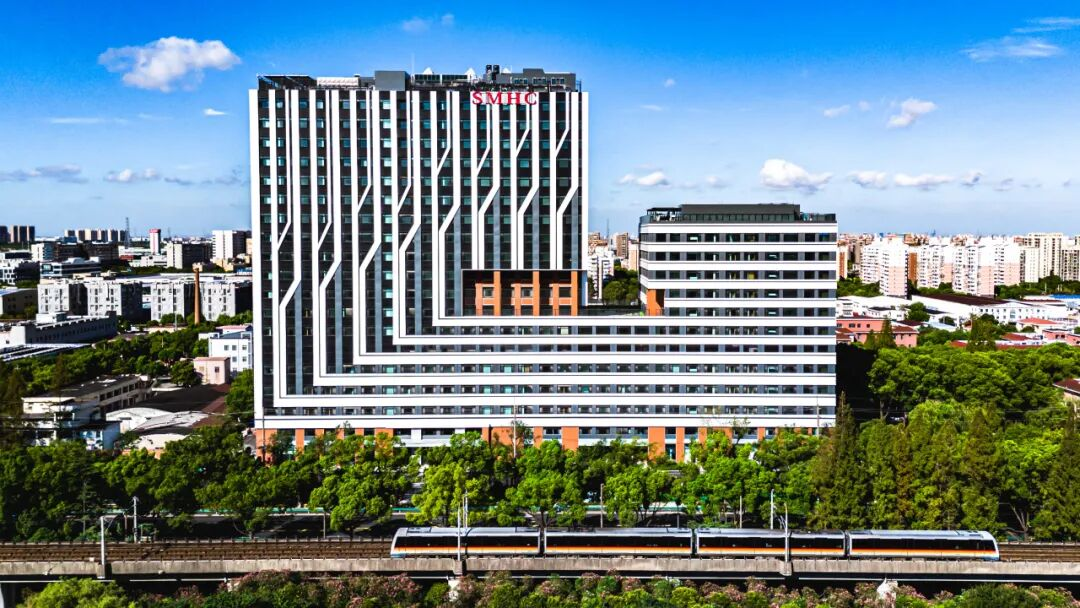
In 1935, the founding of Mercy Hospital lit the Chinese psychiatry sky like a solitary morning star. As the largest mental hospital in the Far East at the time, it shattered the era’s patchwork of custodial care and planted the first seed of scientific mental health care on Chinese soil.
Reborn after 1949 as the Shanghai Psychiatric Hospital, it set out to address a vast landscape of unmet need. In the 1970s, it conceived the innovative “city–district –community” model, a three-tiered network later known as the “Shanghai Model” and recognized by the World Health Organization as the template for mental-health services in developing nations, turning inaccessible asylums into reachable care. In 1982, it became one of WHO’s first collaborating centers in China, training generations of clinicians across the Asia-Pacific. Formally renamed the Shanghai Mental Health Center in 1985, it stepped into an era of transformative excellence.
Through ninety years of storms and sunshine, the center has evolved from the Far East’s largest specialty hospital into a national beacon that integrates clinical care, research, education and prevention. Remaining unwaveringly true to our founding mission: safeguarding mental well-being, the center has completed the full care continuum spanning diagnosis, innovation, public service and talent development, weaving a life-span safety net for every citizen. As President Zhao Min notes, entrusted with the mandate of the National Center for Mental Disorders, the center will spend the next ninety years writing even greater chapters, lending its heart-power to the dream of a Healthy China.
Clinical Breakthrough: Build a Life-Span Health-Shield for Every Citizen
As the National Center for Mental Disorders, we treat clinical service as the vital bridge between public needs and professional excellence. Addressing the pain points of every disorder and the distinct needs of every age group, we use pioneering specialty development to break new ground, integrated care models to enhance efficiency, and breakthrough technologies to improve quality. In doing so, we build a precision diagnosis-and-treatment system that spans the entire life course, from the elderly to adults, adolescents and children, and covers common diseases, rare conditions and the most treatment-resistant disorders so that expert help reaches every corner where it is needed.
Specialty Leadership: Pioneering to close critical gaps
Established in 2003 as the country’s first mood-disorder unit, we helped shift depression and bipolar illness from stigmatized labels to treatable medical conditions. Two decades later, the unit has evolved into Shanghai Jiao Tong University’s Mood Disorders Center, complete with a 24-hour green channel for life-threatening episodes and a “heart-mind” tiered-care network that links tertiary hospitals to community clinics. Leading a 6,000-patient multicenter cohort, we advanced the deep phenotyping of depressive disorders, created China’s first S-ketamine protocol and embedded an AI decision-support tool into routine care, pioneering advances in the diagnosis and treatment of mental disorder.
The Psychosomatic Disorders Center has defined China’s “gold standard” for psychosomatic medicine and, more importantly, cracked the long-standing puzzle of co-existing mind–body illness. Our 1988 unit was China’s first dedicated psychosomatic unit, and in 1995 the department went on to pioneer a quadruple-alliance model integrating the psychiatrist, psychotherapist, consultation-liaison physician, and nursing team, effectively dissolving the fragmentation that still plagues most health systems. We penned the country’s first China Guidelines for the Prevention and Treatment of Eating Disorders (2015) and took the lead in stipulating Standards for the Establishment of Obsessive-Compulsive Disorder Centers in China (2020). The center has trained more than 10,000 psychotherapists, professionalizing an entire workforce and charting a blueprint for integrated care around the country.
In 1958, the center established China’s first research unit for integrated traditional-Chinese and Western psychiatry, launching systematic exploration into TCM-based treatment of mental disorders. Professor Zhou Kang, the founding chief, proposed the groundbreaking theory of blood stasis as an etiological factor in mania, laying the theoretical cornerstone of modern Chinese psychiatry. The department developed multiple in-house herbal formulae—the first TCM compound drugs for psychiatric use in China—and pioneered practices such as datura extract for excited and agitated states and Shixiao powder for periodic psychosis, generating broad academic impact. In 2024, the unit was simultaneously designated a National Flagship Department of Integrated TCM-Western Medicine and a National Key Clinical Specialty, a rare dual distinction within the psychiatric field.
In 2023 we performed the nation’s first deep-brain stimulation (DBS) for refractory schizophrenia, in partnership with Huashan Hospital. More than 20 cases have now been completed with more than 70% efficacy. From Professor Su Zonghua’s pioneering use of ECT in the 1940s, through Professors Xia Zhenyi and Xu Taoyuan’s introduction of anesthesia and muscle relaxant for modified ECT in the 1980s, to the 2007 adoption of transcranial magnetic stimulation (TMS), we have always led neuro-modulation in China. Our Shanghai At-Risk for Psychosis (SHARP) cohort is one of the four major international high-risk cohorts. We were the first to develop a TMS protocol that actually reduces the risk of onset in high-risk populations, giving the world a new early prevention and early intervention path for psychotic disorders.
Integrated Rescue: Breaking Specialty Barriers, Safeguarding the Double-bind Population
When severe mental illness is compounded by physical disease, the Center dismantles inter-hospital barriers and assembles a multidisciplinary unified treatment system to create a seamless, one-stop rescue pathway for society’s most doubly disadvantaged patients.
Critical-Care Psychiatry Unit established China’s first “acute and severe psychiatric conditions with comorbid infectious/physical diseases” chain-of-survival model. A 24/7 rapid-response alliance with Ruijin Hospital and the Shanghai Clinical Center for Infectious Disease delivers whole-chain care for the most complex cases. In 2023, the team saved a depressed patient with a chopstick transfixing the brain. In the first half of 2025, it completed almost 50 multi-disciplinary rescues for perinatal mental disorders, protecting both mother and child from the consequences of severe mental disorders.
Addiction Science Department of the center is the birthplace of China’s modern addiction medicine. Treating opium dependence since the 1950s, the unit became the city’s first voluntary drug rehabilitation center in 1997 and the only Chinese member of UNODC in 2006. The “Shanghai Model” of addiction care—developed by Prof. Zhao Min’s team—is now listed as international best practice. Home to the nation’s longest-running illicit-drug cohort and largest multi-modal addiction database, the department recently launched the first intensive-outpatient program (IOP-A) for novel psychoactive substances and behavioral addictions, setting the national standard for 21st-century addiction treatment.
Full-Cycle Protection: Focus on the “Two Ends” to Build a Life-Span Health Shield
The center concentrates on children/adolescents and the elderly, forging a “prevention–diagnosis–rehabilitation” service system to safeguard mental health at the most critical life stages.
Children & Adolescents Mental Disorders Center is the only institution in China accredited as a National Key Clinical Specialty in Child & Adolescent Psychiatry. Since launching the country’s first child-psychiatry outpatient program in 1986, it has created an integrated “outpatient–inpatient–rehabilitation” model offering the most comprehensive specialty care for ADHD, autism-spectrum disorders, and more. It also trains child psychiatrists and psychotherapists nationwide, channels high-quality resources to lower-level facilities, and underpins the construction of a national child-mental-health network.
Geriatric Depression & Cognitive Disorders Center is the only psychiatry-focused hospital selected as a National Core Advanced Cognitive Disorders Center. Established in 1980, it has led the fight against Alzheimer’s disease (AD) and related dementias. Prof. Li Xia’s team pioneered “Shu-Er” surgery (cervical-cranial lymphatic bypass), and has now been tested in China’s first regulated IIT clinical trial. Their 3-minute cognitive disorder screener, with more than 85% sensitivity and specificity, has screened 400,000 elders across six provinces, raising early AD detection by 30%. As the national lead for the KarXT international multi-center trial, it aligns China’s geriatric cognitive care with global standards. Since 2019, the “Ai-Xi Medical–Elderly Care Alliance” has integrated 37 institutions into a “traffic-light” referral system that solves the post-discharge care gap for elderly.
Research Innovation: A Full-Chain Leap from “Filling the Gap” to “Global Leadership”
Foundational science: Blaze the trail for Chinese psychiatry and lay the field’s foundation
In 1959, the center launched China’s first Neurobiochemistry Laboratory that pioneered pharmacokinetic and adverse-reaction studies on clozapine, supplying the key evidence for its national approval and promoting rational psychopharmacology. In the same year the center founded Shanghai Archives of Psychiatry (renamed General Psychiatry in 2018), the nation’s first psychiatry journal—now the only English psychiatry journal in China ranked in SCI Q1 and a promoter for Chinese research onto the world stage.
In 1965, the center established the country’s first Psychiatric Genetics Laboratory, leading the large-scale population genetic investigations and systematic pedigree research that uncovered the hereditary patterns of mental disorders in China. These findings were incorporated into major textbooks and laid the methodological groundwork for later genomic studies and clinical genetic counseling.
In 1978, the center created the first Neuro-electrophysiology Unit in a Chinese psychiatric hospital that pioneered brainstem evoked-potential (BEP) and event-related-potential (ERP) work, which delivered objective markers for schizophrenia, depression and other disorders, laying the groundwork for modern functional brain-imaging techniques and keeping the center at the forefront nationally ever since.
In 1980, the center designed and rolled out the “Shanghai Model”, a three-tier network linking municipal specialty hospitals, district centers and community clinics. By integrating mental-health care into primary health services, it dramatically improved accessibility. This model won high praise from WHO, provided valuable experience for developing countries, and became a teaching template for capacity-building projects in many countries.
Translational Research: From policy to bedside—turning innovation into benefit for China and the world
In 1998, Prof. Xie Bin’s team launched the nation’s first systematic studies on mental-health policy and legislation. Appointed lead drafting unit for China’s Mental Health Law, the center spent 15 years on field surveys and evidence-building. The Mental Health Law of the People’s Republic of China, officially enacted in 2013, closed a major legislative gap, established patients’ rights, and earned a Shanghai Science & Technology Progress Award—advancing the legislation of psychiatry undertakings in the country.
In 2006, the center became the only Chinese member of UNODC’s Treatnet for drug-dependence treatment and rehabilitation. Prof. Zhao Min helped draft and revise UNODC’s guide The Role of Drug-Dependence Treatment in HIV and AIDS Prevention and Care. The resulting “Shanghai Model” for addiction treatment has since been rolled out across Southeast Asia and Africa, offering a Chinese solution to the global drug dependence issue.
In 2008, Prof. Li Huafang led the first platform for clinical evaluation of psychiatric drugs under China’s National Major Project for Drug Innovation and has received continuous support from the 12th through the 14th Five-Year Plans. Certified to international GCP standards, the platform has completed more than 50 trials (including ten Class-1 new drugs), accelerated domestic approvals and narrowed the R&D gap in psychiatric drugs with global peers, becoming a major pillar of the national drug-innovation system.
In 2010, Prof. Wang Zhen’s team published a landmark discovery: selective volume reduction of the hippocampal CA3/dentate-gyrus subfields in PTSD. Providing the first precise neuro-anatomic evidence of the disorder’s pathology, the finding opened new treatment targets. The home-grown subfield segmentation tool of the team was globally recognized and enhanced the center’s reputation as an internationally competitive PTSD research hub.
Brain-Health Frontier: Build a “Basic–Clinical–Translational” Hub to Command the Heights of Brain Science
In 2022, the Brain Health Institute at the National Center for Mental Disorders (BHI@NCMD) was officially established, signaling a strategic shift in China’s mental-health field from “disease research” to “brain-health maintenance.” The institute delivers multiple national firsts: the first SPF-grade animal facility in a Chinese psychiatric hospital, supplying standardized models for research on animal models of disease; a modular “human-research platform” that fuses EEG, fNIRS, TMS and other multimodal technologies to dissect human cognition and brain function; and the first systematic adoption of the DSM-5 Structured Clinical Interview (SCID-5), now the benchmark for clinical psychiatry studies across the country. In 2025 the institute was accredited as a Shanghai Science-Education Base, one of the few sites nationwide that turns real laboratories into public brain-health classrooms.
Today, BHI@NCMD hosts 79 full-time scientists, including National Distinguished Young Scholars and Changjiang Professors. It leads three municipal pillars—the Shanghai Key Laboratory for Severe Mental Disorders, the Smart Psychological Assessment & Engineering Technology Center, and the Institute of Traditional Chinese Medicine for Mental Disorders—moving discoveries from bench to bedside and ensuring that patients reap the benefits of cutting-edge brain science.
Public welfare pioneer: A 35-Year-Long “Lifeline for the Mind”
The center’s most critical lifeline is the 962525 Shanghai Psychological Hotline. Born in 1990 as the city’s first “Mental Health Counseling Hotline,” it has evolved for 35 years: it merged into the 12320 platform in 2008, was upgraded in 2021 by unifying 17 district-level lines into “021-962525,” and was fully integrated with the national 12356 hotline in 2025.
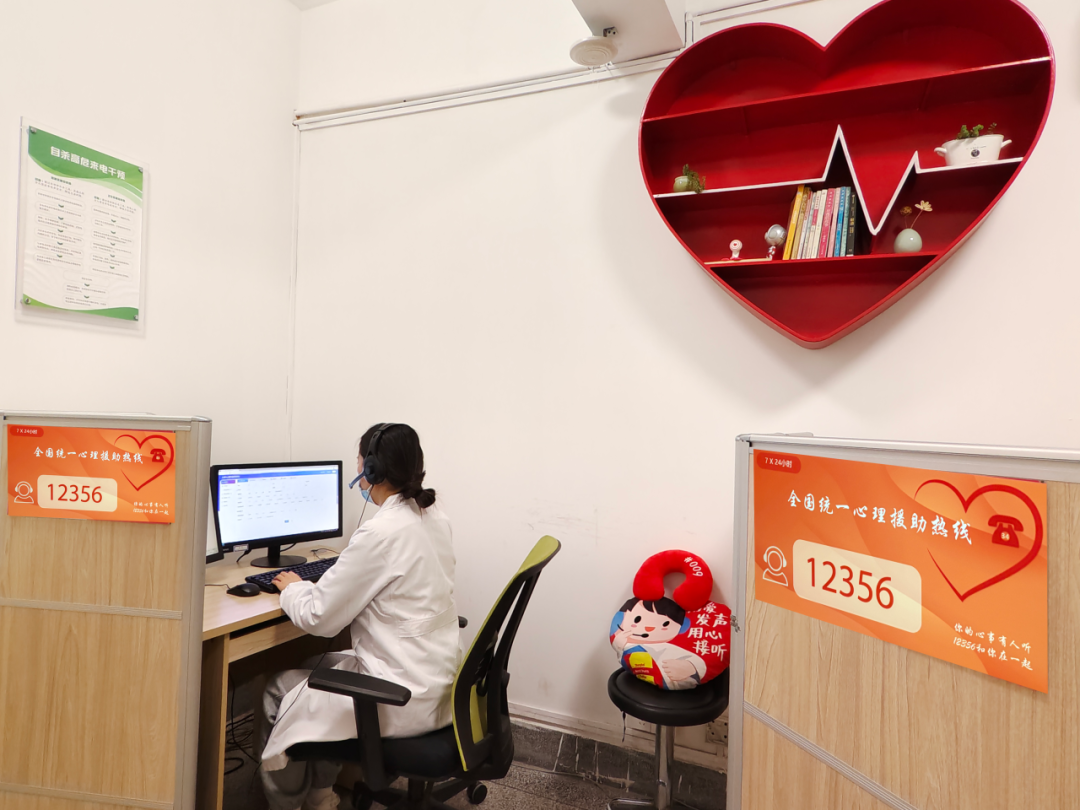
Guided by the motto “Care with compassion, listen with patience, and guide with calm,” the line offers 24/7 free, professional support—lauded as citizens’ “mental firewall.” What began as night-shift crisis intervention now spans all 16 districts around the clock. In the past four years alone, 962525 has answered more than 200,000 calls (around a 65% answer-rate) and de-escalated 2,000+ high-risk situations, preventing countless tragedies.
Talent as Cornerstone: Igniting the “Torchbearers” of Mental-Health Care
Talent lies at the core of research innovation and clinical breakthroughs. In nine decades the center has placed education at its core, forging a seamless pipeline that runs from undergraduate training through residency and lifelong professional development. Affiliated to Shanghai Jiao Tong University School of Medicine, it partners with SJTU, Fudan, Tongji and others to feed a steady stream of psychiatrists, psychologists and social-work leaders into the system. It has founded the SJTU School of Mental & Clinical Psychology, co-established the SJTU School of Psychology, and launched the NCMD Psychotherapy Academy—creating a comprehensive cradle for high-caliber professionals.
Two flagship schemes, “Peak-Climbers” for senior talent and “Future Leaders” for early-career innovators, sharpen expertise at every level. As a national training hub, the center graduates more than 100 residents and 200 psychotherapists annually, ranking top in quality nationwide. During the 14th Five-Year Plan alone, a total of 22 faculty members held positions in international academic organizations; 21 experts received the State Council Special Allowance; 7 new national-level talents and 47 provincial- or ministerial-level talents were added. In addition, 39 new graduate supervisors were appointed, and 37 postdoctoral researchers joined the institute. In 2024, the emergence of 65 national-level leading scholars became the clearest proof of the center’s “select-train-manage-deploy” ecosystem.
The center is also China’s envoy to the global psychiatry community. Its experts helped craft WHO’s ICD-11, and its China-Germany Psychotherapy Training Program—nicknamed the “Whampoa Academy” for Chinese therapists—has trained more than 10,000 professionals, continually passing the torch to the next generation.
Multi-pronged Efforts: Advance Citizens’ Mental-Health Literacy
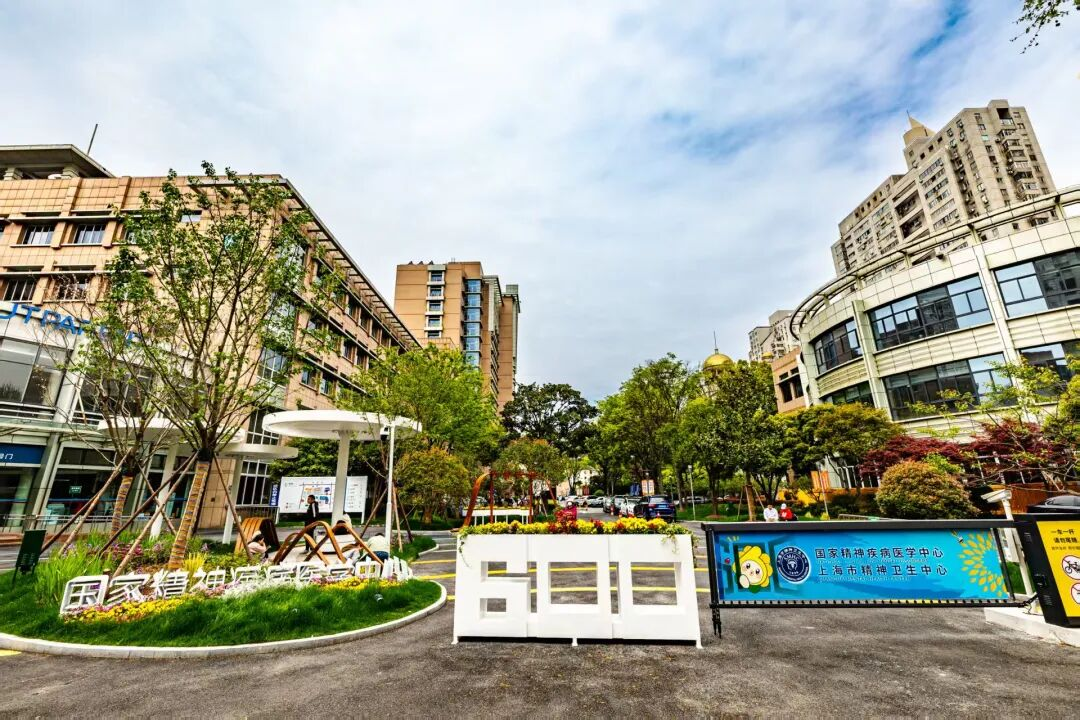
Guided by the belief that “prevention outranks cure,” the No. 600 has rolled out a comprehensive package to raise Shanghai’s mental-health literacy. It has built a network to provide city-wide coverage of 16 districts and 216 sub-districts with mental-health promotion hubs. To innovate in communication models and break down cognition barriers, a multi-platform communication matrix has been set up to incorporate official Weibo & WeChat, 23 discipline-based sub-accounts, plus Bilibili, Douyin and other mainstream sites. The No. 600 Gallery, Asia’s first patient-art science corridor in a psychiatric hospital, fights stigma through creativity. Cross-sector partnerships have been nurtured with publishers, Xinhua agency, and Himalaya podcasts to roll out life-span science series and launch columns like “Letters from No. 600” to spread psychological knowledge into every household. Cultural convergence has also been fostered with a human touch of expertise. Documentaries like “Life Matters” and “Bad Mood? It’s OK” as well as music-therapy pieces and crossover cultural products have been hammered to weave mental-health themes into daily life. All these have helped raise city-wide mental-health literacy from 7% to 20%.
Mental health and psychological well-being are major public-health and social issues that bear on a nation’s socioeconomic development and its people’s overall health. The center has been dedicated to building a “community with a shared future for mental health” to promote construction of the National Center for Mental Disorders and the National Quality Control Center for Psychiatry, aiming to refine a full-population, life-span mental-health service system. Under a “hyper-specialty, mini-complex” model, it pursues a development strategy grounded in translational, precision, integrative and service medicine, supported by a national critical-care and psychological emergency system. The goal is to build a Shanghai-based, China-serving, East Asia referral hub for severe and complex disorders, paired with world-class science communication—a research-driven, smart, influential and compassionate institution that lifts mental-health service capacity nationwide.