Mental health and mental hygiene issues are major public health and social issues related to economic and social development, as well as citizen’s health and well-being. In recent years, the equity and accessibility of mental health services in China have improved significantly, and the quality and efficiency of services have continued to improve. Based on the new stage of development, while China is making achievements in the construction of mental health service system, the problems of unbalanced and insufficient development are still relatively prominent, and there is still a certain gap between the mental health service system and the citizen’s needs. It is of great significance to deepen the division of labor and cooperation among relevant departments and institutions, enhance the training of professional personnel, and advance the capacity of mental health services to meet the needs of the entire population with a full life span, and to promote the high-quality development of the mental healthcare, and to advance the construction of a healthy China.
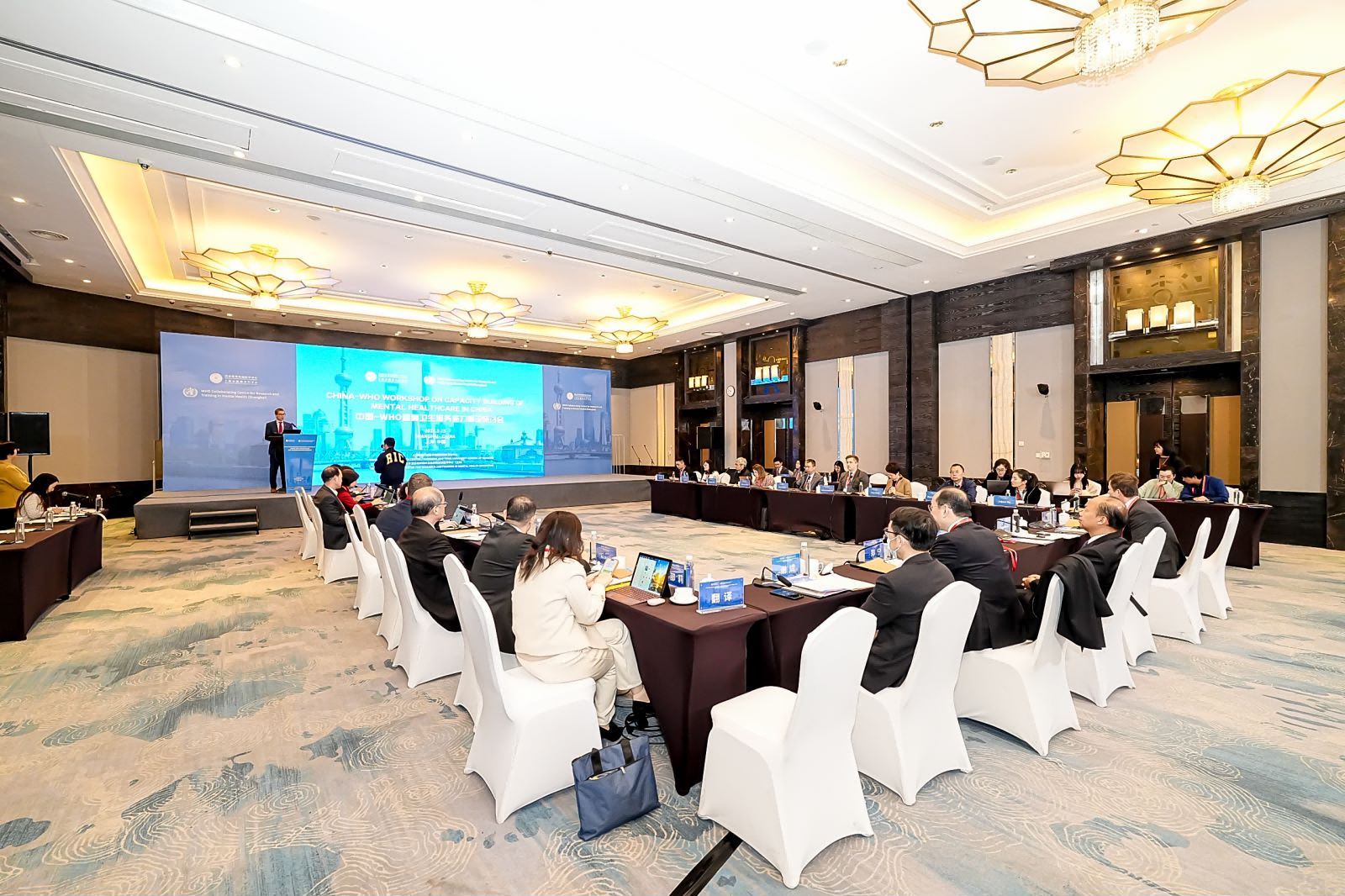
On March 15th, the China-WHO Workshop on Capacity Building of Mental Healthcare in China hosted by the National Center for Mental Disorders and Shanghai Mental Health World Health Organization (WHO) Department of Mental Health and Substance Use, WHO Country Office in China, WHO Collaborating Centers (WHOCC), main institutions of the National Center for Mental Disorders, the National Center for Mental Health and other authoritative institutions gathered in Shanghai to share their insights on the challenges and opportunities of China’s mental health services and the action plan for improving the capacity of China’s mental healthcare capabilities. This is an opportunity to strengthen the collaboration between corresponding centers and institutions, as well as an excellent chance to delve into the issue of promoting the quality and expansion of mental health services in China and improving the capacity of mental health services.
Dr. Min ZHAO, the director of the National Center for Mental Disorders and the president of Shanghai Mental Health Center, presided over the opening ceremony. Prof. Martin Taylor, WHO representative in China, Prof. Hongwen YAO, the director of the National Center for Mental Health, Prof. Ning ZHENG, the Vice-president of Shanghai Hospital Development Center, and Dr. Bin XIE, the Chair of the Deans Council of Shanghai Mental Health Center delivered speeches respectively. The guests unanimously affirmed the fruitful collaboration between WHO and China in the capacity building of mental health services and hoped to continue to consolidate the collaborative relationship and promote a more comprehensive, close, practical, and efficient collaboration with high quality. The National Center for Mental Health, the major institutions of National Center for Mental Disorders, and provincial mental health centers will focus on the difficulties and problems faced by China in the process of Mental health service capacity building, conduct in-depth research, actively practice, and collaborate extensively to contribute to the high-quality development of mental healthcare.
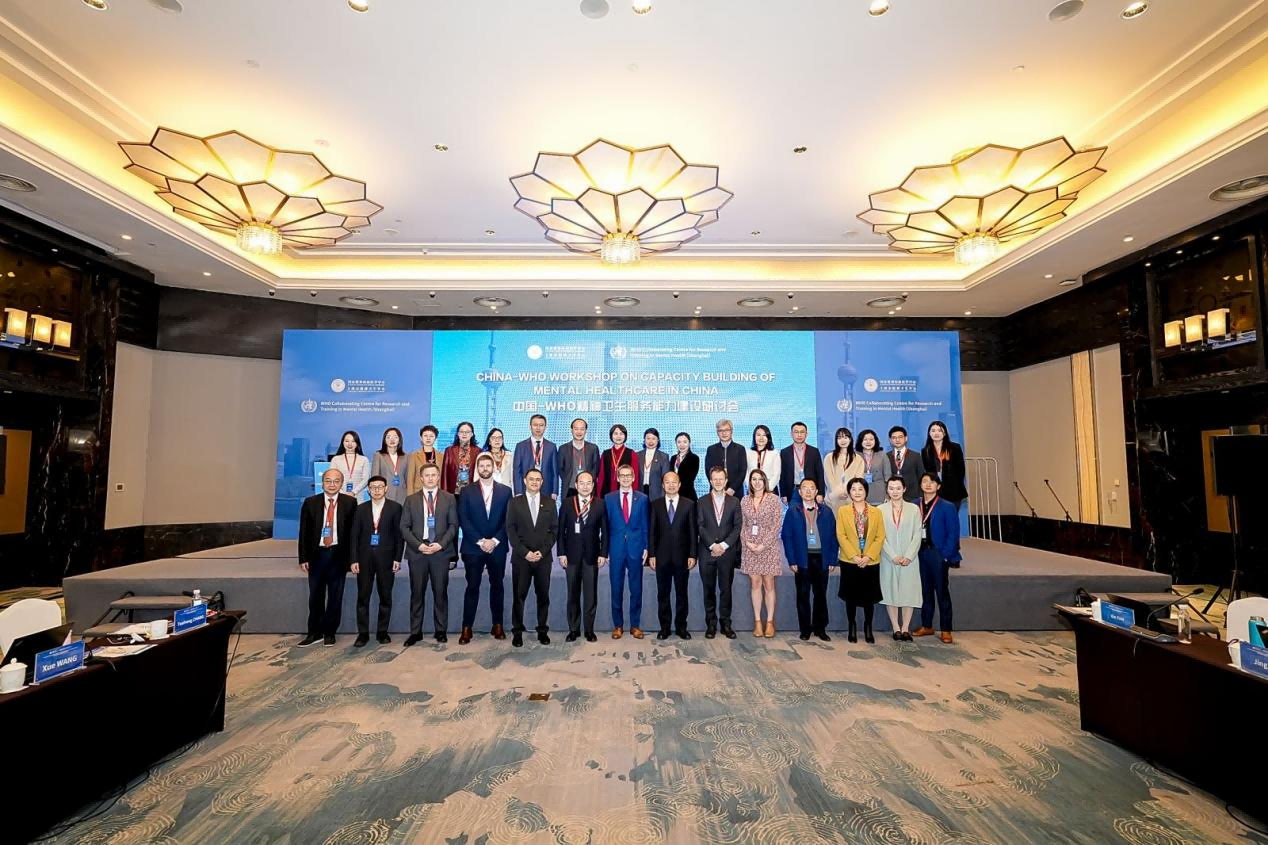
In 2022, the Shanghai Mental Health Center was listed as the National Center for Mental Disorders. In 2023, it was entrusted by the Department of Medical Affairs of the National Health Commission for the preparation of the National Mental Healthcare Quality Control Center. Dr. Min ZHAO, the director of Shanghai Mental Health Center, stated that the center takes the high-standard construction of National Center for Mental Disorders and the National Mental Healthcare Quality Control Center as the starting point, keeps in mind the mission and responsibility of the National Center for Mental Disorder, focuses on the transition of the service concept from disease to health, pioneers and innovates in the training of high-standard mental health professionals and in the exchange and cooperation with domestic and international experts. This professional workshop will effectively promote communication and collaboration among organizations and institutions and embark on a new journey to improve the capacity of mental health services in China.
The workshop adopted the form of a combination of keynote speeches and plenary discussions. The keynote speeches covered the introduction of WHO mental health capacity building programs, the promotion and development of child and adolescent mental health, capacity building for specialized mental health professionals in China and so on. Experts from the WHO Department of Mental Health and Substance Use, WHO Country Office in China, United Nations Children’s Fund (UNICEF) China Office, National Center for Mental Health, Shanghai Mental Health Center, The Second Xiangya Hospital of Central South University, Peking University Sixth Hospital, Beijing Anding Hospital Capital Medical University, Beijing Huilongguan Hospital, Nanjing Brain Hospital, and Tianjin Anding Hospital and other institutions focused on the theme of ‘capacity building of mental healthcare in China’ and conduct in-depth discussions on the status of development, needs of the society, and anticipated challenges, and examined the goals and tasks of improving mental healthcare capacity in China, and put forward feasible paths and strategies.
The 14th Five-Year Plan for National Public Health emphasizes the promotion of mental health and the improvement of mental health service capacity. National Health Commission and other relevant ministries and commissions implement these major decisions and arrangements, and jointly promote mental health and mental hygiene work from the perspectives of prevention services and diagnosis and treatment services. Shanghai, as one of the birthplaces of psychiatry in China, has always been at the forefront of the psychiatric field nationally, representing the cutting-edge level of psychiatric development in China. In the 1970s, Shanghai proposed a clinical intervention model that combines "prevention" and "treatment" of mental and psychological diseases. It established the "Shanghai Model," a three-tier prevention and treatment network for mental diseases praised by WHO, and has carried out effective prevention, treatment, and rehabilitation work on this basis. Today, our city has built a relatively complete mental health service system, led by the Shanghai Mental Health Center, with secondary specialized psychiatric hospitals and many general hospital psychiatric departments as the main body, supported by community health service institutions, community rehabilitation institutions for patients with mental disorders, various community care institutions, and psychological counseling centers, making it one of the regions with the richest mental health service resources in the country.
Mental health is not only related to social harmony and stability, but also related to people’s well-being and sense of accessibility. Experts believe that to improve mental health service capabilities, on the one hand, it is necessary to continuously strengthen the service capacity building of psychiatric specialties, corporate mental health treatment services into an important part of the overall healthcare system, and improve the construction of sub-specialties (such as geriatrics, pediatrics, psychosomatic medicine and so on) and specialized outpatient clinics (such as sleep specialized outpatient clinics, memory specialized outpatient clinics, obsessive-compulsive disorder clinic, and addiction outpatient clinics and so on). On the other hand, effort should be made to improve and enrich the means, technology and quality of mental health services, and a concept of ‘meta-medicine’ should be adopted to provide comprehensive interventions for patients with mental disorders from many domains such as biology, psychology, and environment and other factors. In addition, it is necessary to strengthen the outpatient construction and service capacity of psychiatric and psychological departments in general hospitals, and it is also possible to set up dedicated wards with a certain number of beds, especially for patients with mental disorders accompanied by serious physical illnesses, pregnancy, and other conditions, so that these patients can enjoy guarantee from a multi-faceted health care system. Experts emphasize that mental health services nowadays are not only for patients with mental disorder, but also for the general public, and the focus of service principle has shifted from diagnosis and treatment of mental disorders to mental health promotion. Therefore, it is very crucial to expand the scientific popularization of mental health knowledge to enhance the mental health literacy of the whole population on the premise of early detection, early diagnosis, and early treatment of mental disorders. To target the shortage of mental health personnel, experts have pointed out that the situation can be improved by carrying out job-transfer training for psychiatrists and establishing corresponding majors in universities to increase the supply of human resources. Especially for the problem of insufficient resources at the grassroots level, it is necessary to allow the medical personnel in medical institutions below the county level to expand their licensure scope and provide corresponding mental health services after completing standardized training.
‘We need to adhere to the principle of openness and inclusiveness, harnessing collective wisdom and strengthening the collaboration and support between different departments and institutions, and jointly build a high-standard and efficient mental health service network. We need to be goal-oriented and problem-oriented, and address areas of weakness, especially in our ability to provide mental health services for children, adolescents, pregnant women, and individuals with severe mental illness. We need to strengthen coordination and linkage with the government, conduct in-depth policy research, and provide strong support for the government’s scientific decision-making and governance. We need to continue to step up our efforts to promote the dissemination of mental health knowledge, improve public mental health literacy, and work to eliminate the stigma against mental disorders.’ Dr. Bin XIE, the Chair of the Deans Council of Shanghai Mental Health Center, stated that Shanghai Mental Health Center will continue to strengthen collaboration with the WHO, WHOCC, the major institutions of the National Center for Mental Disorders, provincial specialized hospitals, and other institutions, and work together to promote the high-quality development of mental healthcare, protect the health rights and interests of people, and promote health equity.